
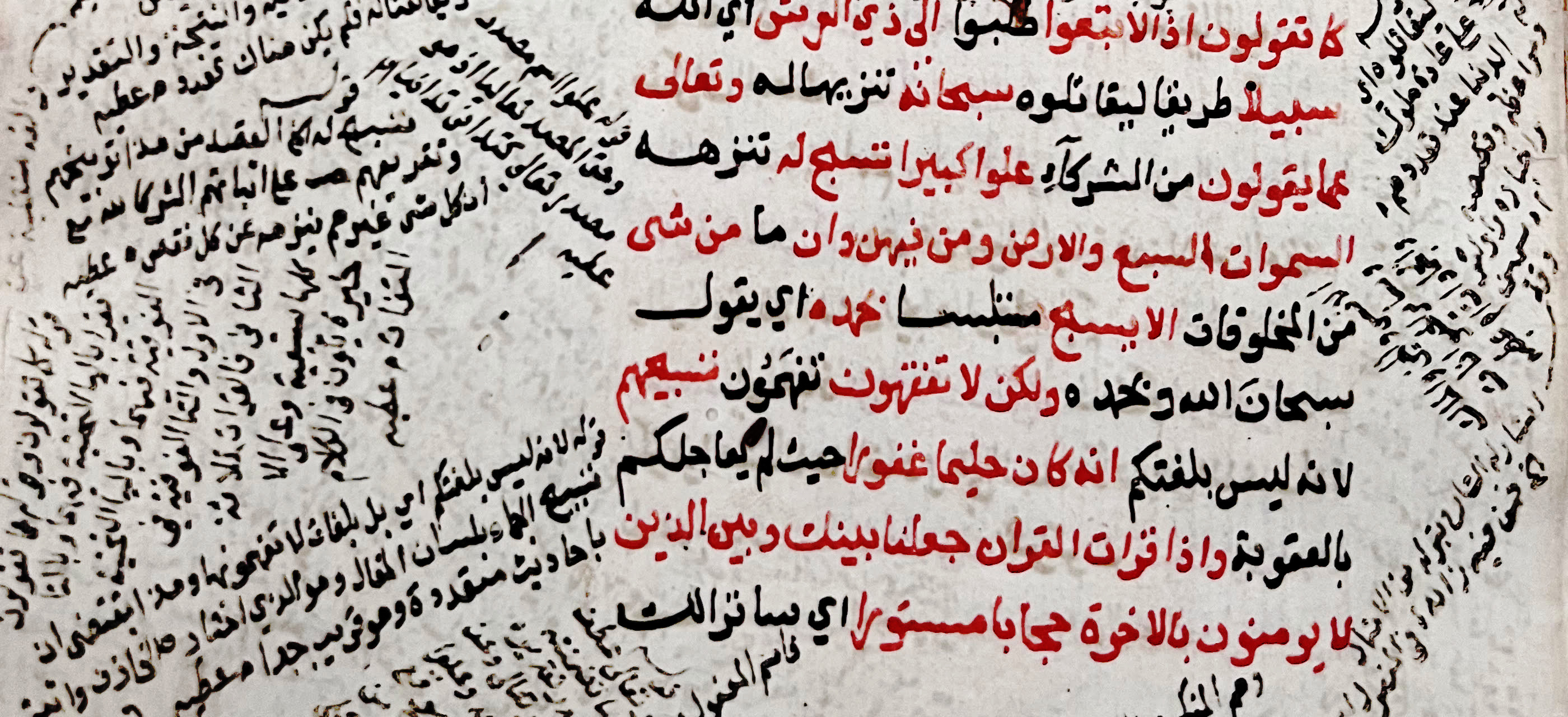
Migrant Manuscripts in the Jebel Nafusa, Libya
Contenu
- Titre
- Migrant Manuscripts in the Jebel Nafusa, Libya
- présenté lors de
- Circulations: 17th Annual Lawrence J. Schoenberg Symposium on Manuscript Studies in the Digital Age
- Type
- Symposium
- Auteur
- Love Jr, Paul M.
- Date
- 2024-11-22
- Résumé
-
Manuscripts produced and used by Ibadi Muslim communities have been on the move in the Maghrib and beyond for over a millennium. Yet most Ibadi texts, including most extant copies of pre-modern texts, were copied from the 18th century onward. This means that any study of these manuscripts must address their early modern and modern histories, including their encounter with colonialism, their role in shaping post-independence nationalist historiographies, and contemporary efforts at manuscript documentation in the region.
In this presentation, I follow the history of manuscript migration connected to Ibadi communities in the Jebel Nafusa through four intersecting themes. The first relates to the objects themselves, pausing to consider the history of their production, based on a survey of manuscript catalogs and data from recent digitization and documentation projects in the region. This dimension has migration at its core, since many “Nafusi” manuscripts were produced outside the Jebel Nafusa in other centers of Ibadi learning in Northern Africa.
Continuing to follow the manuscripts as they moved through space allows us to trace the trajectories of their copyists and owners. Using exemplary private libraries today located in Djerba, Tunisia, I present a migrant manuscript trajectories that connect the Jebel Nafusa, Cairo, the Mzab Valley in Algeria, and the island of Djerba. I then turn my attention to an important but often neglected aspect of Maghribi manuscript histories; namely, their colonial legacies. Finally, I highlight the work done by local Ibadi organizations in the past two decades to document and to preserve individually and collectively owned manuscript collections. - Place
- Pennsylvania
- Langue
- eng
Position : 3796 (49 vues)