
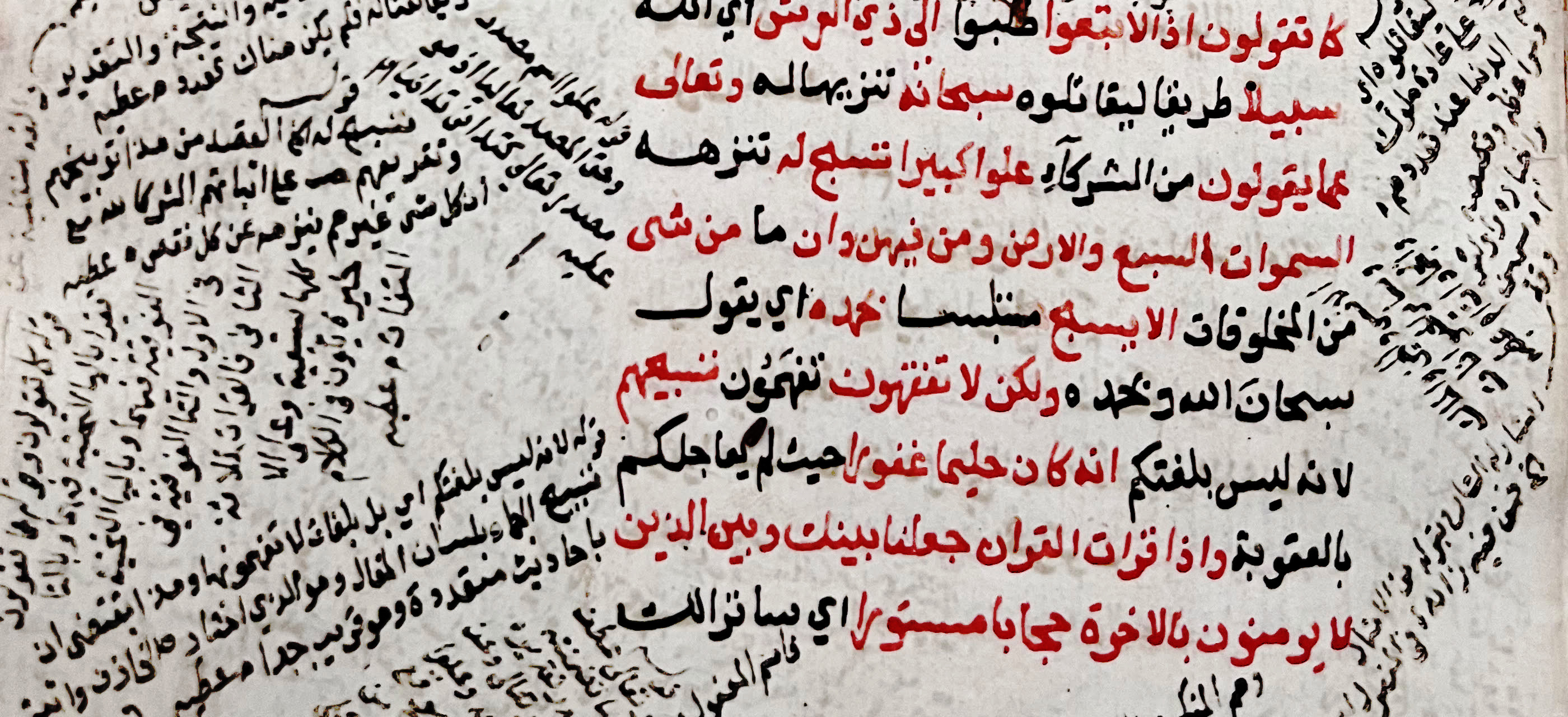
Ebû Hafs Amrûs b. Feth en-Nefûsî’nin Usûlü’d-Deynûne Eseri Bağlamında İbâdî Kelâmında Mezhepsel Reddiyeler
Contenu
- Titre
- Ebû Hafs Amrûs b. Feth en-Nefûsî’nin Usûlü’d-Deynûne Eseri Bağlamında İbâdî Kelâmında Mezhepsel Reddiyeler
- Créateur
- Önemli̇, Kadri
- Résumé
- This study examines the extant treatise of Amrus b. al-Fath, one of the prominent Ibadi jurists and theologians of the 3rd/9th century, within the framework of the sect's identity construction and faith parameters. The primary objective of the study extends beyond providing a mere translation; it aims to conduct a philological examination of the original Arabic text, a conceptual translation, and a profound theological-legal analysis. The article deciphers the institutional identity of Ibadism, particularly as it was forged during the Rustamid period in the Maghreb, and its ontological divergence from mainstream sects through the author’s unique terminology. In the intellectual world of Amrus b. al-Fath, the "faith-works" (iman-amal) integrity is not merely a theoretical claim but a legal norm that determines social statuses. Against the Murji'ite approach that excludes works and the rigid Takfiri stance of the Sufriyya, the author constructs a "middle ground" (Ahl al-Adl) through the concepts of "ingratitude" (kufr al-ni'ma) and "hypocrisy" (nifaq). Within this framework, the status of those who commit grave sins (murtakib al-kabira) is formulated as Muslims in terms of worldly rulings, yet subject to eternal punishment in the hereafter. Another noteworthy element in the text is the central role of technical terms such as "idgal" (corruption in faith) and "tamadi" (persistence in sin) in the school's theory of excuse and understanding of religious obligation (mukallafiyya). The methodological originality of the study lies in its critique of rival sects such as the Mu'tazila, Murji'a, and Shi'a through the lens of "logical consistency." Amrus b. al-Fath prioritizes methodological discipline in Islamic law by arguing that conflicting rulings (such as inheritance and booty) cannot be applied simultaneously to the same person or property. Furthermore, he strengthens the legitimacy of the Ibadi theory of imamate by reinterpreting the "Arbitration" (Tahkim) issue as the superiority of divine decree over human will. Consequently, this research reveals that the ideal of "pure religion" (al-dinat al-safiya) advocated by Amrus b. al-Fath is a rational and justice-centered system established amidst the chaotic atmosphere of the period.
- Est une partie de
- ISPEC International Journal of Social Sciences & Humanities
- Couverture spatiale
- Ankara
- Date
- 2026
- volume
- 10
- numéro
- 2
- pages
- 238-254
- doi
- 10.5281/zenodo.20777087
- issn
- 2717-7262
- Langue
- tur
- Source
- www.ispecjournal.org
Pas de vue